
What a Franklin County Court Docket Is
The docket is the spine of a case. It lists each filing and each order in the sequence it happened. Think of it as the index to the whole file. When you open a case in a county search tool, the docket is the screen you land on. From there you can read the entries, check the next court date, and, where the documents are public, open linked images.
People often mix up a docket and a full case record. They are not the same thing. The docket is the timeline of events with short labels for each one. The full record holds the actual documents, the complaint, the motions, the orders, and the final judgment entry. A docket entry might read "motion filed" or "judgment entry." The document behind that entry is the paper itself. Some dockets in Franklin County link the document image. Others list the entry but make you request the paper from the clerk. That split is the single most useful thing to understand before a search.
Most dockets here are public. Ohio courts presume access. Still, sealed cases, juvenile matters, and confidential probate files stay out of the open search, which keeps some dockets hidden by law.
How to Search Franklin County Court Dockets
Pick the court first. That one choice saves the most time. The Clerk of Courts runs Case Information Online for Common Pleas dockets, which covers General Division civil and criminal cases, Domestic Relations cases, and Tenth District appeals. Municipal traffic and misdemeanor dockets live in a separate search run by the Municipal Court Clerk. Probate keeps estates, guardianships, name changes, and marriage matters in its own case search. Each tool is free and open to anyone.
Have a name or a case number ready before you start. A case number pulls one clean docket. A name alone can return a long list, so add a court type or a date range to trim it. The steps below work for the main Common Pleas tool.
- Open Case Information Online from the Clerk of Courts.
- Choose a name search or a case-number search.
- Set the Court dropdown to Appeals, Civil, Criminal, or Domestic.
- Add a filing-date range if the name is common.
- Open the result and read the docket entries in date order.
The Clerk also posts an Online Payment link and a Court Schedule link on the same screen. The Court Schedule link helps when you want upcoming hearing dates rather than past filings. For full filing instructions and the search-field layout, the Franklin County court records page breaks down each box on the form.
Reading Franklin County Court Docket Entries
A docket entry is one line in the case timeline. Each line names an event and the date it was filed or ordered. Read top to bottom, or oldest to newest, depending on how the tool sorts. The early entries open the case. The middle entries carry the motions and hearings. The last entries usually hold the judgment or the dismissal. Common Pleas dockets in Case Information Online can also link a document image when that paper is public, so an entry may double as a door to the PDF.
The labels follow a pattern once you learn them. A complaint or an indictment starts the case. A summons and a service return show the other side got notice. Motions ask the court to do something. Orders and judgment entries record what the judge decided. The table below lists common Franklin County docket entries and what each one means, so the timeline reads less like code and more like a story.
| Docket Entry | What It Means |
|---|---|
| Complaint / Indictment | The filing that opens a civil claim or a criminal charge. |
| Summons Issued / Service Return | Notice was sent to a party and confirmed as delivered. |
| Arraignment | First criminal appearance where the charge and plea are addressed. |
| Motion / Memorandum | A written request asking the court for an order. |
| Order / Judgment Entry | The court's ruling or final decision in the matter. |
| Continuance | A hearing or trial was moved to a later date. |
| Capias / Bench Warrant | An order to take a person into custody, often after a missed date. |
| Dismissal / Satisfaction | The case ended, or a judgment was paid off. |
Some entries link nothing and just mark a step. Others open the full paper. Both still count as part of the record.
Franklin County Docket Status Codes
Status tells you where a case stands right now. Common Pleas dockets use plain words like open, closed, and reopened. Municipal Court dockets use a longer set of codes, since they track jail, diversion, and the path through a judge or magistrate. A closed status does not always mean the matter is fully done, so the smart move is to read the docket detail, check any amount due, and look for a warrant flag before you draw a conclusion.
The Municipal Court Clerk publishes a fixed list of status values in its search. They appear in a dropdown so you can filter by them. Knowing what they stand for keeps you from misreading a result. The list below pulls common Franklin County docket status values you will see.
- Open - The case is active and still moving.
- Closed - The court has finished the matter, though money may still be owed.
- Reopen (RO) - A closed case was put back on the active list.
- Jail - The case involves a person currently in custody.
- Diversion - The defendant is in a program that may dismiss the charge on completion.
- Submitted to Judge / Magistrate - The matter is awaiting a decision from the bench.
- Post Sentence Hearing - A hearing set after sentencing has been scheduled.
Note: A closed Franklin County docket can still carry an unpaid balance or an open warrant flag, so check the amount due and warrant status before assuming a case is fully resolved.
Hearing Dates on Franklin County Dockets
Dockets are also where you find out when to show up. Each scheduled event lands on the docket with a date, and many entries also show a time, a courtroom, and the judge or magistrate assigned. For Common Pleas cases, the Court Schedule link on the Case Information Online screen pulls upcoming dates without making you dig through every past filing. That link is the fast route when your only question is when the next hearing falls.
Municipal Court dockets show court dates next to the amount due and the warrant status. That layout helps a defendant or a witness plan ahead. Hearing types vary by case. A criminal docket may list an arraignment, a pretrial, and a trial date. A civil docket may list a case-management conference and a final hearing. The docket updates as dates are set, moved, or held, so a continuance entry tells you a date was pushed back.
Always confirm a hearing date close to the day itself. Courts move dates. The online docket is current, but a late entry can change the plan.
Documents on Franklin County Court Dockets
A docket entry and the document behind it are two different things. The entry is the label. The document is the actual filing. On Common Pleas dockets in Case Information Online, the page source carries an image processor, which means some entries link a viewable PDF when that paper is public. Click the entry and the image opens. When no link shows, the paper still exists, but you request it from the clerk instead of pulling it on screen.
Municipal Court search leans more toward docket and case information than full document downloads. To get a Municipal filing, you may need to contact that clerk. The same holds for older Common Pleas files kept on microfilm or in storage. Sealed and confidential documents never appear, even when a stripped-down docket line does. If you need a paper that courts and agencies will accept as proof, ask the clerk for a certified copy rather than printing the on-screen image.
The split between entry and document matters most for people building a case file. A plain printout of a docket is not the same as a certified copy of the judgment.
Dockets Versus Full Case Records
It helps to see the two side by side. A docket is the event log. A full case record is the event log plus every document, every exhibit, and every order. People search a docket to track progress and find dates. People pull a full record when they need the actual paperwork, the disposition, and the financial detail. Both come from the same court tool in Franklin County, but they answer different questions.
- Docket
- A dated list of every filing, hearing, and order in a case, with short labels for each event.
- Case Record
- The complete file, with the documents, exhibits, judgment entries, and financial obligations behind those docket labels.
- Disposition
- The outcome of a charge or claim, recorded as a docket entry and detailed in the full record.
For a deeper look at what a finished file holds, the Franklin County court records page lays out the full field set. If your interest is a criminal matter or a citation, the arrest records and traffic court records pages cover those dockets in more detail.
Federal Court Dockets for Franklin County Cases
State dockets do not cover federal cases. Franklin County sits in the U.S. District Court for the Southern District of Ohio, and federal matters use a separate national system called PACER. PACER is the official public access tool for federal docket sheets and documents. You set up an account, search by court or by the case locator, and pay a per-page fee unless a waiver, an exemption, or a quarterly minimum applies under current policy. CM/ECF is the filing side for attorneys; PACER is the public reading side.
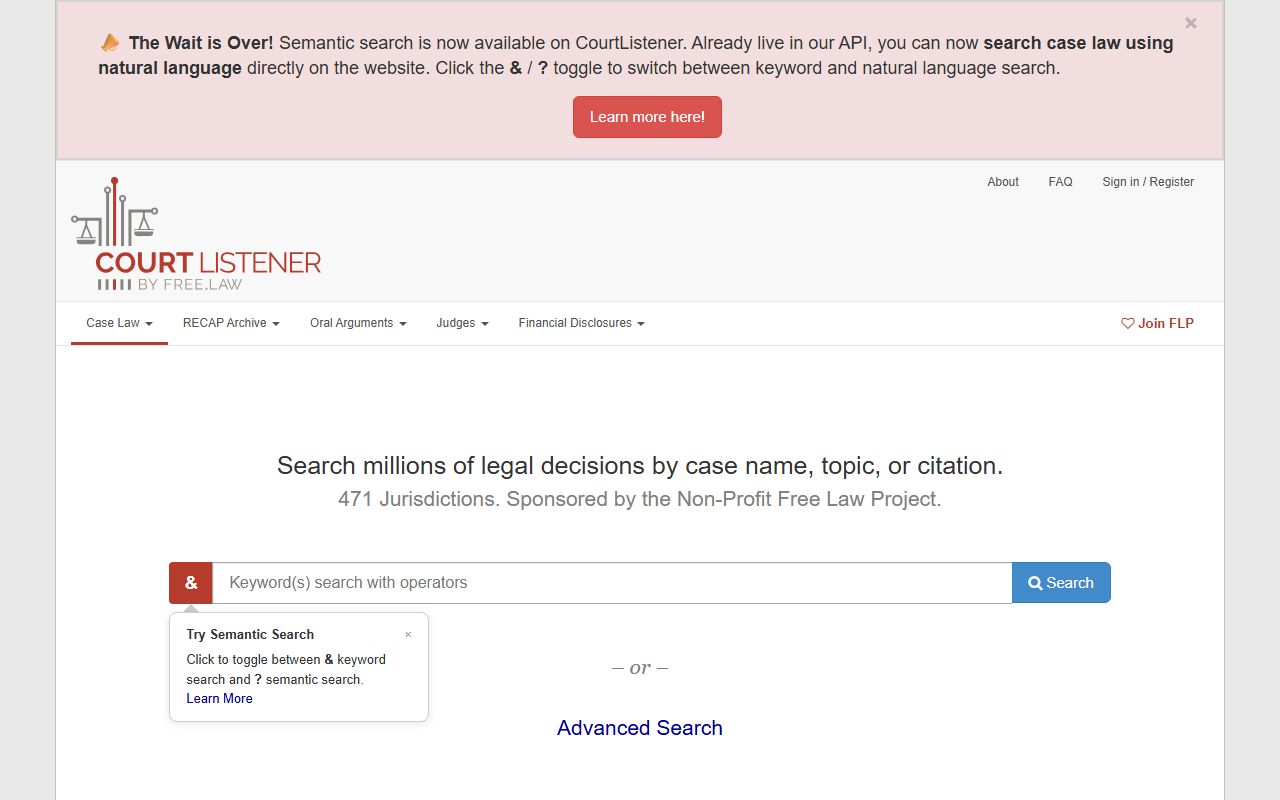
There is also a free research option, though it is not the official docket. CourtListener hosts opinions and some shared RECAP docket material at no cost. It is a research aid, not the court of record.
A free docket and opinion research tool is one starting point for federal case background. CourtListener offers free opinions and some RECAP docket material, though it is not the official federal docket.
For the authoritative federal docket, you register through PACER itself. The PACER registration and fee portal is where users create an account and access official federal case dockets.
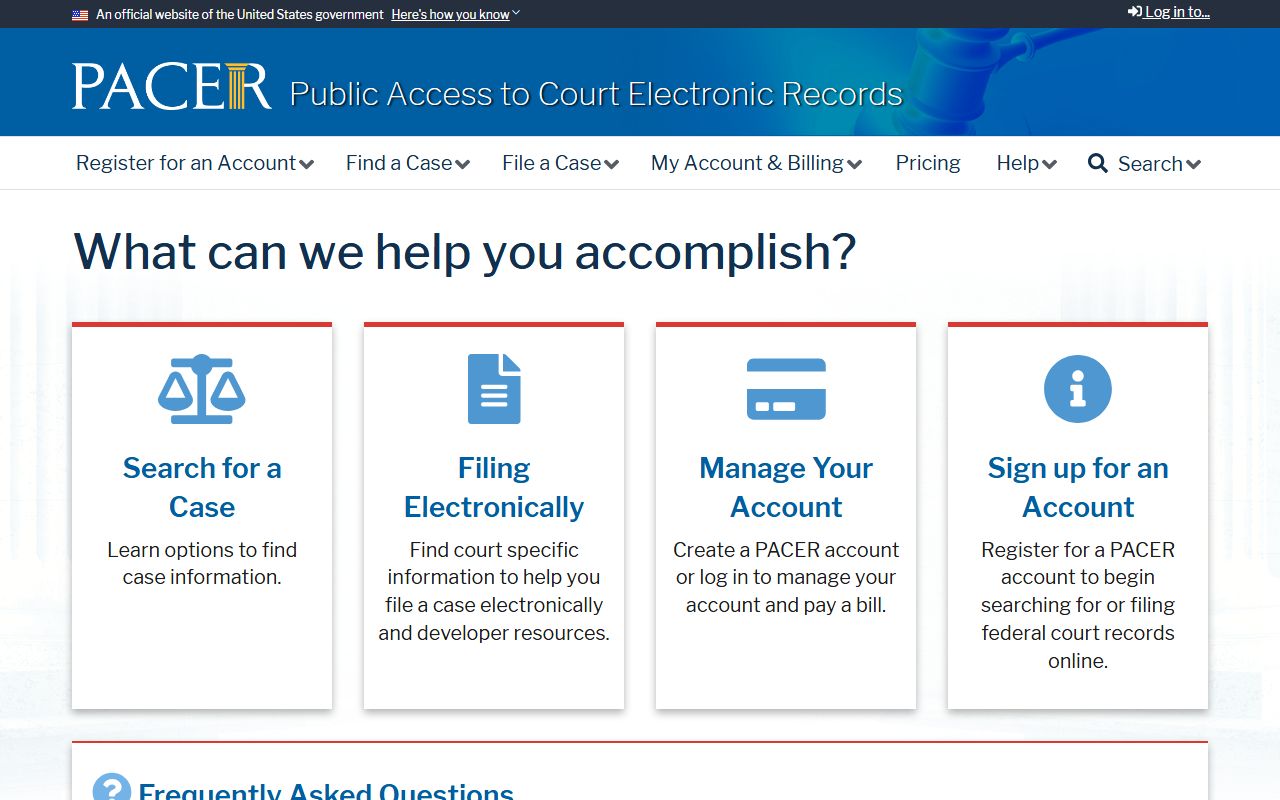
Once registered, PACER reaches each federal court that serves the county.
Bankruptcy and Appellate Dockets
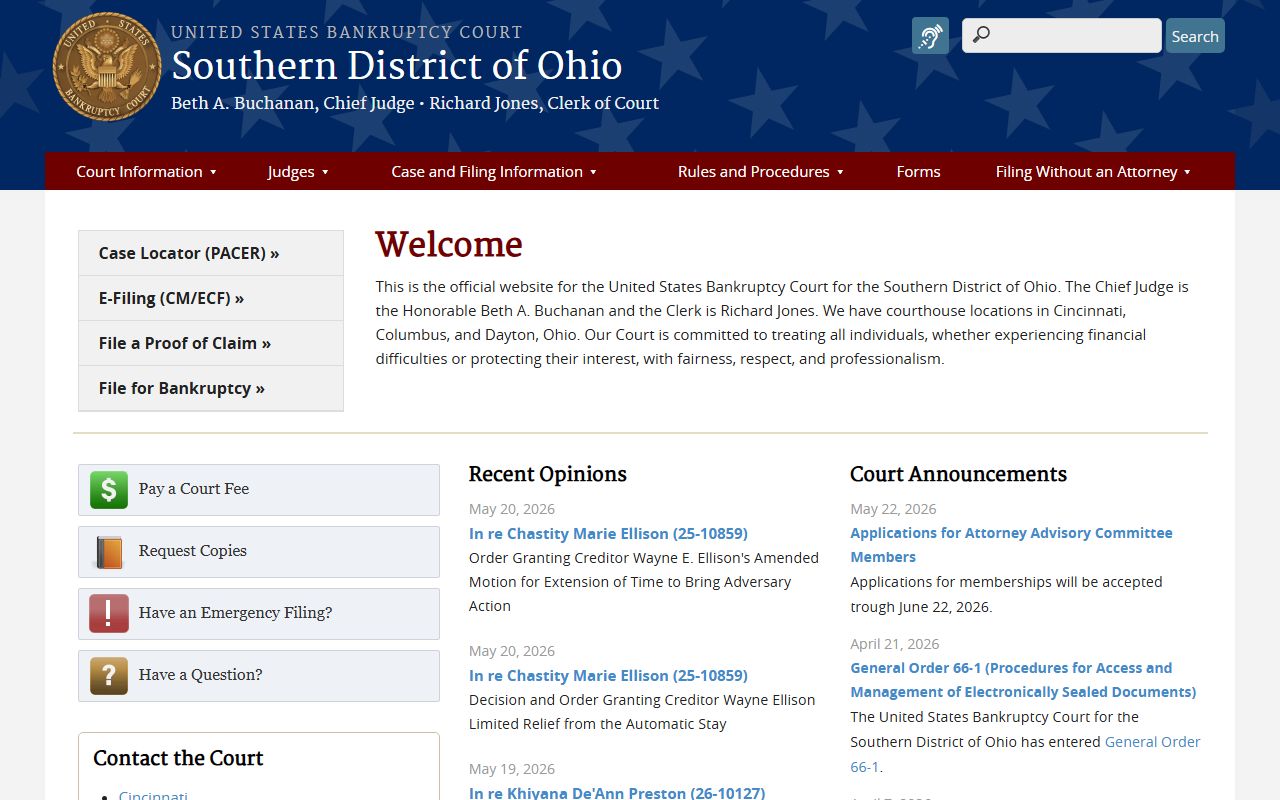
Not every federal docket lives in the district court. Bankruptcy cases from this area go to the U.S. Bankruptcy Court for the Southern District of Ohio, which keeps its own dockets reached through PACER. If you are tracking a Chapter 7 or Chapter 13 filing tied to Franklin County, that court is the source. The general district court will not hold a bankruptcy docket.
Bankruptcy filings have their own court and their own docket trail. The U.S. Bankruptcy Court for the Southern District of Ohio publishes information and routes case access through PACER.
Appeals from the Southern District of Ohio climb one more level. They go to the U.S. Court of Appeals for the Sixth Circuit, which hears federal appeals for Ohio and several nearby states. Its dockets, like the trial-level ones, are reached through PACER. A federal case that loses at the district level and gets appealed will show a new docket at this court.
Federal appeals from this region are heard at the circuit level. The U.S. Court of Appeals for the Sixth Circuit hears appeals from the Southern District of Ohio and posts its docket access through PACER.
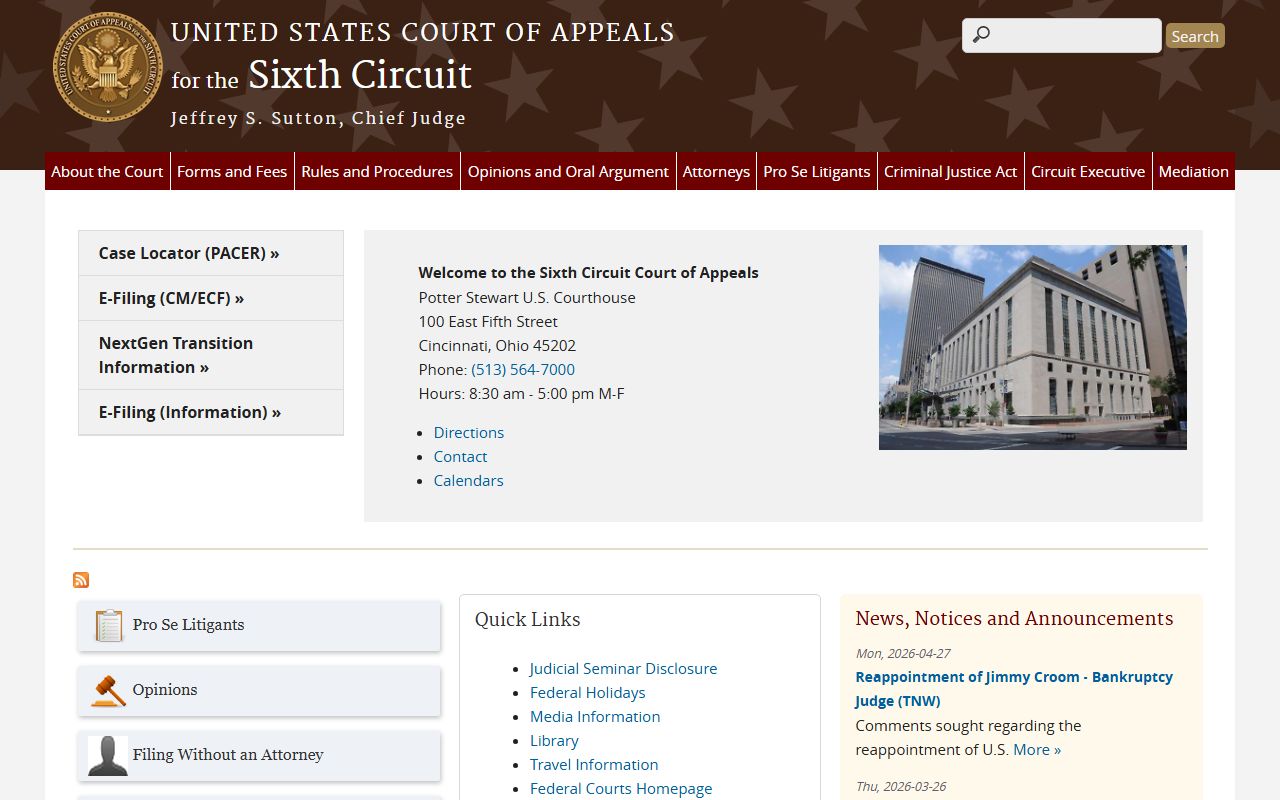
Federal dockets follow this flow: District Court to the Sixth Circuit on appeal, with bankruptcy on its own track. All three sit behind PACER.