
How to Find Franklin County Arrest Records
Arrest and booking records start with the Sheriff. The Franklin County Sheriff's Office runs a public inmate search that shows current inmates, their current charges, current case numbers, the location set for visitation, and court dates. It is the first stop for a recent arrest. The search is free. You do not need an account to look someone up.
The Sheriff's tool focuses on people in custody right now. The public form has the Current option checked and locked, so it returns current inmates rather than a long history of past bookings. If a person was arrested and then released, the live roster may no longer show them. In that case, the court docket carries the case forward. Bond detail is the one field the Sheriff tells you not to trust from the jail system, since that comes from the Clerk of Courts instead. Knowing that split keeps a search from going sideways.
- Open the Sheriff's public inmate booking lookup.
- Enter a last name, and add a first name to narrow it.
- Use the race, sex, or age filters only if the list is long.
- Open the record to see charges, case numbers, and court dates.
- Check the case in court for bond and the current status.
For people already moved into the jail system rather than just booked, the Franklin County inmate records page goes deeper into the roster, visitation, and facility detail.
Franklin County Arrest Record Search Fields
The Sheriff's booking lookup keeps the form simple. A last name alone can start a search. The other boxes just trim a long result list. The table below lists the fields pulled from the live public form, so you know what to expect before you open it. The Offender Status dropdown sits on the page but stays disabled in the public view, and the inmate selection is fixed to current bookings.
| Field Label | Type | Required | Notes / Format |
|---|---|---|---|
| Inmate Selection | Radio | Fixed | Current is checked and locked; only current inmates show. |
| Last Name | Text | No | Up to 35 characters; main name field. |
| First Name | Text | No | Up to 35 characters. |
| Race | Dropdown | No | Blank, Asian-Pacific Islander, Black, Hispanic, American Indian, Unknown, White. |
| Sex | Dropdown | No | Blank, Female, Male, Transgender, Unknown. |
| Age | Text | No | Numeric age filter. |
| Offender Status | Dropdown | Disabled | Present on the page but locked in public view. |
Keep the search broad first. A common last name with no other field often beats a too-tight search that returns nothing.
What Franklin County Arrest Records Show
An arrest record captures a moment, not an outcome. When police book someone into the jail, the system logs identity, the charges at booking, and the case the charge ties to. The Sheriff's own description says a record shows current inmate status, current charges, current case numbers, the location set for visitation, and court dates. Those fields tell you what someone is held on and when they next appear before a judge. They do not tell you guilt.
The booking process itself generates much of this data. An arrested person is transported to county custody, then searched, photographed, fingerprinted, medically screened, classified, and assigned housing. Each step feeds a field. The list below covers the arrest and booking fields you are most likely to see in a Franklin County result.
- Name - The booked person's full name as recorded.
- Charges - The current charges the person is held on.
- Case numbers - The court case tied to the charges.
- Court dates - Upcoming hearing dates in the system.
- Location - The facility set for visitation.
- Age, race, sex - Basic descriptors used as search filters.
Note: The Sheriff warns that bond information in the jail system is not authoritative, so verify any bond amount through the Clerk of Courts before you act on it.
Mugshots and Booking Photos
A mugshot is the booking photograph taken when a person enters custody. People often expect every arrest record to show one. In practice, the Franklin County public booking tool centers on names, charges, case numbers, and court dates, and a photo is not confirmed as a guaranteed field in the public form. Treat the mugshot as possible, not certain.
One thing to keep in mind. A booking photo is tied to an arrest, not a conviction. A photo proves someone was booked. It does not prove a court found them guilty. Private mugshot sites that repost these images are not official sources and are not used here. For anything you mean to rely on, go to the Sheriff's tool and the court docket rather than a third-party repost. Photos on the official system follow the same access limits as the rest of the record, so sealed and juvenile matters stay out of public view.
Arrest Record vs Criminal Court Record
These two records sound alike but answer different questions. An arrest record is the booking side, kept by the Sheriff. A criminal court record is the case side, kept by the Clerk of Courts and the Municipal Court Clerk. One starts when police book someone. The other follows the charge through every hearing to a final result. The comparison below lays out the split.
| Arrest Record | Criminal Court Record |
|---|---|
| Created at booking by the Sheriff. | Created when a charge is filed in court. |
| Shows charges, case number, court dates, custody status. | Shows filings, pleas, motions, sentencing, disposition. |
| Found through the Sheriff inmate lookup. | Found through Case Information Online or the Municipal search. |
| Reflects what police alleged. | Reflects what the court decided. |
For the full case history, the verdict, and the financial obligations, the Franklin County court records page is the right tool. The arrest record gets you started; the court record finishes the story.
Charges Versus Convictions
This is the distinction that trips people up most. A charge is an accusation. A conviction is a court finding of guilt. An arrest record lists charges. It does not list a conviction. A person can be arrested and charged, then have the case dismissed, reduced, or end in acquittal. None of that erases the original booking, but it changes the legal outcome entirely. Reading a charge as a conviction is a common and serious mistake.
| Charge | Conviction |
|---|---|
| An accusation by police or a prosecutor. | A court finding or plea of guilt. |
| Appears on the arrest and booking record. | Appears on the criminal court record as a disposition. |
| May be dropped, reduced, or dismissed. | Carries the sentence and lasting consequences. |
The Franklin County Prosecutor is the office that decides which charges move forward in the General Division. Its work bridges the arrest and the court case.
The decision to pursue or drop a charge runs through the prosecutor's office. The Franklin County Prosecutor reviews charges, handles felony cases, and manages the divisions that take an arrest toward a court outcome.

Because a charge is not proof of guilt, the gap between arrest and verdict matters in every record check.
Public and Restricted Arrest Records
Ohio presumes court records are open, and most adult arrest and case data is public. But several categories are walled off. Juvenile records carry tight limits under Ohio law and often need party status, attorney status, or a court order to view. Sealed and expunged records drop out of public access once a court grants the order. Personal identifiers like Social Security numbers are redacted from filings. So an arrest record may exist, yet sit outside the public search by law.
Defendants who cannot afford a lawyer get one through the public defender. That office is a useful contact when an arrest is fresh and questions about rights and next steps pile up.
People facing charges can find counsel through the county directory. The Franklin County Public Defender directory lists the office that represents defendants who cannot afford private counsel.
Restricted does not mean gone. It means access narrows to certain people and purposes set by statute.
Sealed Versus Expunged Records
Ohio uses both terms, and they are not identical. Sealing limits public access to a record. Expungement is the deletion-style relief Ohio law allows for eligible records. Both flow from the same statute, Ohio Revised Code section 2953.32, and both need a court to grant the request. An eligible person files in the court that heard the case, the court weighs eligibility and waiting periods, the prosecutor may object, and a hearing may follow. If granted, the record leaves public view.
| Sealed | Expunged |
|---|---|
| Public access is limited; the record still exists. | The record is deleted as Ohio law permits. |
| Certain officials and agencies may still inspect it. | Inspection is far more restricted. |
| Granted by court order under ORC 2953.32. | Granted by court order under ORC 2953.32. |
One key point. A sealed record is not erased for every purpose. Under Ohio Revised Code section 2953.34, courts, law enforcement, licensing bodies, and certain agencies may still inspect sealed records in limited cases. Before filing, check whether the case is Common Pleas or Municipal, since the custodian and forms differ between them.
Statewide and Background Check Routes
County tools cover county custody. They do not cover the whole state. A person sentenced to an Ohio prison shows up in the state system, not the county jail roster. The Ohio Department of Rehabilitation and Correction runs an offender search for people in state custody or under state supervision. Someone released from the Franklin County jail may not appear there unless they were transferred to state custody.
Background checks are a separate concern with legal weight. Identity and personal-identifier rules apply when records carry sensitive data, and Ohio treats misuse of personal identifying information as a crime. Anyone pulling records for employment, tenant, or credit decisions also falls under federal fair-credit rules, which this site does not support. The point is simple: an arrest record is a starting fact, not a cleared background, and the law limits how it can be used.
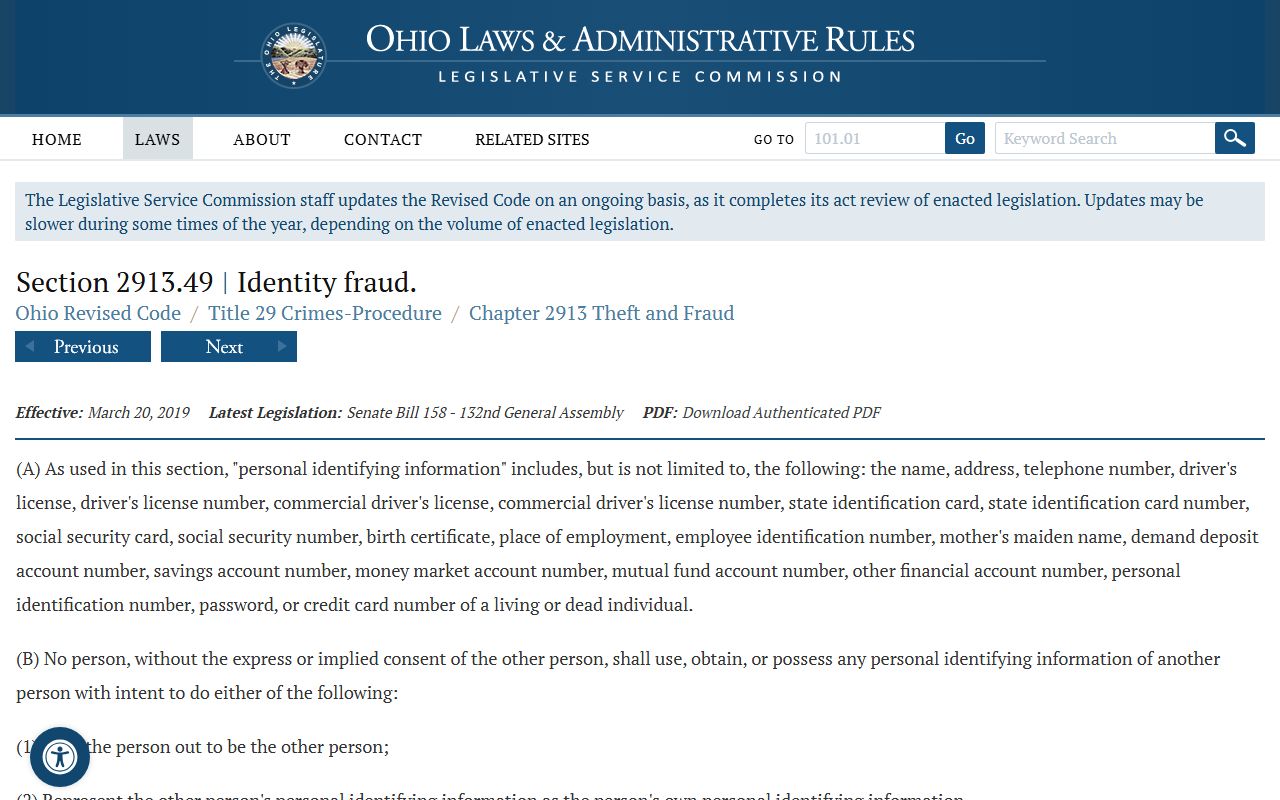
Personal identifiers in records are protected by statute. Ohio Revised Code section 2913.49 covers identity fraud and the misuse of personal identifying information, which shapes what gets redacted from public files.
Treat any single record as one piece. The full picture needs the court file too.