
Searching Franklin County Court Records
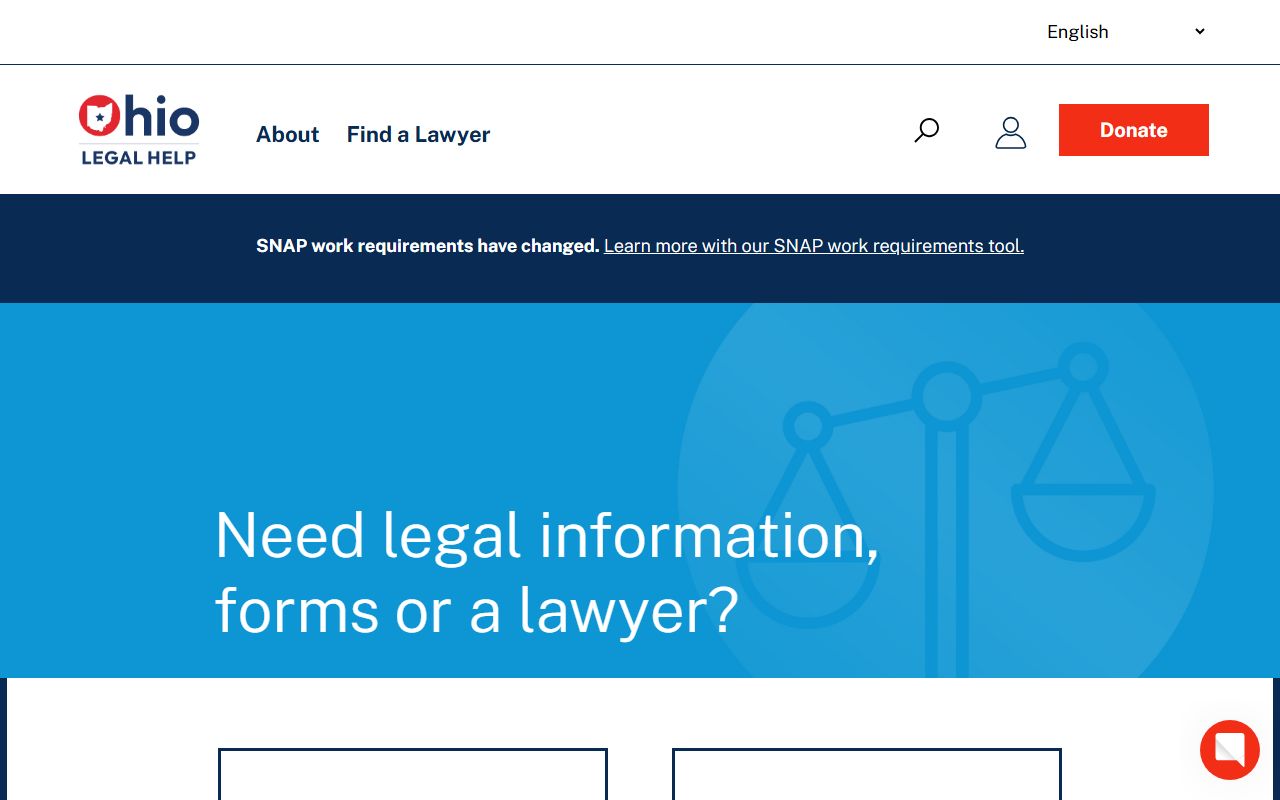
Most questions start with how to find a case. The county runs several free search portals, and the right one depends on the court. The questions below cover the main tools and how to use them. Ohio Legal Help is a good statewide starting point when you are not sure where to begin.
Ohio Legal Help offers free statewide guidance on court issues, family law, sealing, and more.
The answers that follow break the work down by court and record type.
How do I search Franklin County Common Pleas court records?
Use Case Information Online, the Clerk of Courts portal. Search by last name, first name, and middle initial, then pick a court category. Or search by case number using the year, the case-type code, and the sequence. Court options are All, Appeals, Civil, Criminal, and Domestic. For Legal Division help, the Clerk lists 614-525-3600. Full details on each portal are on the Franklin County court records page.
How do I search Municipal Court records?
Use the Municipal Court Clerk case search. The Clerk requires one of four routes: a case number, a ticket number, a last name plus first name, or a company name. Optional filters include middle name, date of birth, party type, case type, case year, and case status. The help page says a case or ticket number is the most efficient method. The Municipal Court Clerk page walks through the office and its tools.
Does the Municipal Court search require every field?
No. The Municipal Clerk says not all fields are required, and you should begin by searching by name, case number, or ticket number. Add extra fields only if you need to. For name searches, both first and last name are required. The Clerk's own help page on this site has more on starting routes and search tips, and the Municipal Clerk publishes its own FAQ as well.
Why can a closed Municipal case still show unresolved items?
The Municipal Clerk help text says most cases fall into open or closed, but a closed status does not always mean the case is finished or adjudicated. Always open the docket detail and check the amount due, court dates, and warrant status before you assume a case is done. Traffic cases follow the same rule, covered on the traffic court records page.
Which Court Handles Your Case
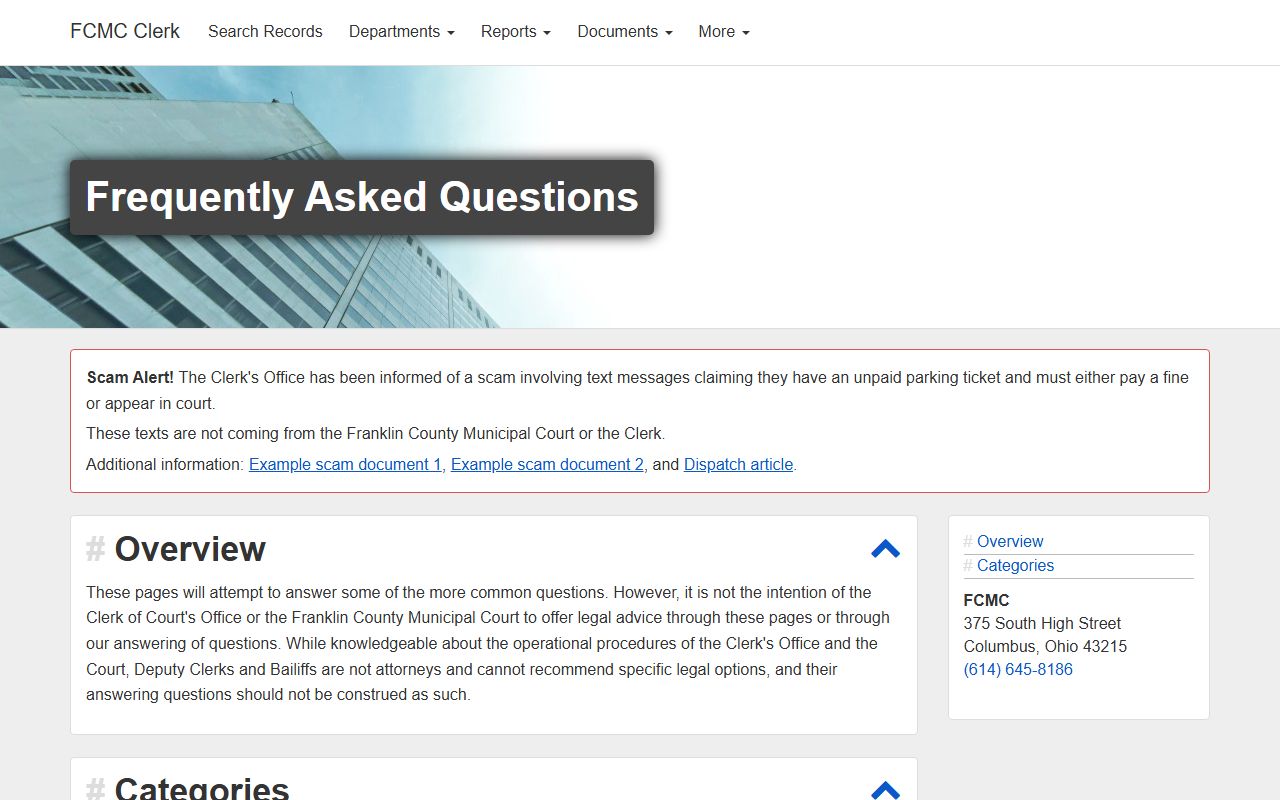
Franklin County splits cases among several courts. A felony, a ticket, and a divorce each land in a different place. The Municipal Clerk's own FAQ is a handy reference for traffic and misdemeanor matters.
The Franklin County Municipal Court Clerk FAQ answers common questions about Municipal traffic, criminal, and civil cases.
These answers help you match a case to the right court.
What court handles felony cases in Franklin County?
Felony cases go to the Franklin County Court of Common Pleas, General Division, at 345 S. High Street. The General Division has original jurisdiction over felony criminal cases and civil cases over $15,000. The Clerk's General Civil/Criminal office is on the 1st Floor and can be reached at 614-525-3621. The Court of Common Pleas page covers each division in detail.
What court handles traffic tickets?
The Franklin County Municipal Court handles traffic cases within its jurisdiction. Search records at the Municipal Clerk portal using a ticket number, case number, or name. The court is at 375 S. High St., Columbus, OH 43215. It also hears misdemeanor criminal cases and civil cases of $15,000 or less. The traffic court records page covers citation lookups and how to pay or contest a ticket.
What court handles small civil claims and evictions?
The Franklin County Municipal Court handles civil cases where the amount at issue is $15,000 or less. Its case search includes party types such as landlord and tenant. The court's Environmental Division handles local real-property code enforcement, including fire and building codes. These files are searchable through the Municipal Clerk portal described on the Municipal Court Clerk page.
Where are appeals filed?
Franklin County appeals go to the Court of Appeals, Tenth Appellate District of Ohio. The Franklin County Clerk of Courts Appeals Division is at 373 South High Street, 23rd Floor, phone 614-525-3624. The same Clerk that holds Common Pleas files also handles appellate filings and records. More on the office is on the Clerk of Courts page.
Marriage, Divorce, and Probate Records
Family and probate records have their own offices and rules. Divorce sits with Common Pleas, while marriage and estates sit with Probate. These answers sort out where each one lives.
Where do I find divorce records?
Divorce and dissolution records are in Case Information Online under Domestic cases. Use Court = Domestic in a name search, or use case codes DM for Domestic Dissolution and DR for Domestic Divorce when searching by case number. The Domestic Relations Clerk is at 373 South High Street, 4th Floor, phone 614-525-4410. The marriage and divorce records page covers the full process.
Where do I get a marriage license?
The Franklin County Probate Court Marriage Department issues licenses at 373 South High Street, 23rd Floor. Both parties must finish the online application before appearing in person, and the last license is issued at 4:00 p.m. The fee is $65. Certified marriage abstracts cost $2 per copy. See the marriage and divorce records page for the steps.
How far back do Franklin County marriage records go?
Probate Court keeps marriage records from 1803 to the present. The online marriage search covers Jan. 3, 1995 to today. Older marriage records from 1803 to 1994 are available at the Probate Court rather than through the online search. Genealogy researchers often need the older set, which is held on microfilm and other formats. The probate records page has more.
What probate records are public?
Probate keeps estates, guardianships, name changes, marriage licenses, and other matters. Some records are confidential by law and not open for inspection, including adoption, mental illness, and developmental disability records. Probate records may exist as hard copy, microfilm, microfiche, or electronic images depending on age. The probate records page explains what you can view.
How do I get certified probate records?
Contact Probate Certified Records at 614-525-3899. Probate Court keeps records in several formats depending on their age. The cashier closes at 4:30 p.m., and the court asks people with fee or payment business to arrive no later than 4:00 p.m. A certified copy carries the court's seal for legal use. The probate records page covers ordering.
Inmates, Warrants, and Custody
Custody and warrant questions come up often. The Sheriff runs an inmate search, but bond information belongs with the Clerk. These answers point to the right tool for each one.
Where do I search for an inmate?
Use the Sheriff's inmate lookup linked from the Sheriff's Inmate Information page. The public booking search lets you find current inmates by name, race, sex, and age. The Sheriff says the system shows current inmates, charges, case numbers, visitation location, and court dates. The inmate records page covers the search and what results show.
Is the bond information in the inmate search reliable?
The Sheriff advises that any bond information should still be obtained through the Clerk of Courts office. The inmate system is built around current custody, charges, and court dates, not authoritative bond figures. Search the relevant court docket and contact the Common Pleas or Municipal Clerk depending on the case. The Clerk of Courts page has division contacts.
How do I search for warrants?
Start with official systems only. The Municipal Court search may show warrant status for Municipal cases. Case Information Online may show warrant or capias docket entries for Common Pleas cases. The Sheriff also keeps a Wanted Persons page and directs tips to law enforcement. Do not rely on third-party warrant sites. The warrant records page lists every official route.
How do I find recent arrests?
Recent arrests show up through the Sheriff's current inmate booking search and through the court dockets once charges are filed. The Sheriff system focuses on people in custody now, with charges and court dates. Booking details and the difference between an arrest and a court record are covered on the arrest records page, which also links to the inmate search.
Public Records Rights in Ohio
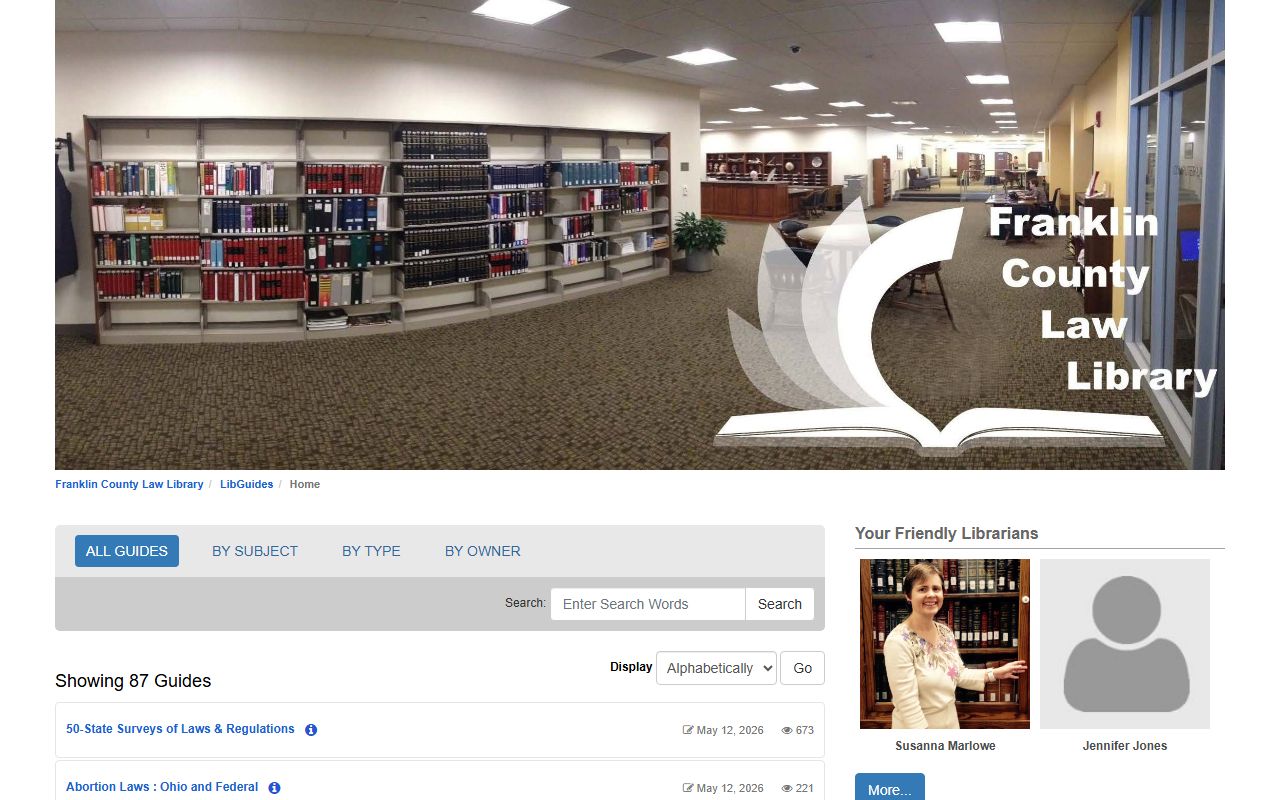
Ohio law leans toward open records, but a few rules apply. The Franklin County Law Library is a free public resource for digging into court rules and access law.
The Franklin County Law Library research guides offer free help with Ohio court rules and public records law.
These answers explain your rights and the limits.
Can I request records without giving my name?
The Clerk's public records policy says a requester does not have to submit a request in writing, prove identity, or reveal the intended use. The request must identify the records with enough clarity for staff to locate them. Staff may ask for clarification if a request is unclear. The full framework is on the public records page.
What if a record is partly confidential?
The Clerk's policy says non-exempt portions should be released and any redaction explained with legal authority. Ohio law and court rules protect sealed records, juvenile records, adoption records, mental-health records, personal identifiers, and other restricted materials. When part of a file is exempt, the office releases the public portion. The public records page covers redaction and disputes.
Can I see adoption records online?
Generally no. Probate's certified records page says adoption records are confidential by law and not open for public inspection. Ohio Revised Code 3107.17 also closes adoption hearings and restricts disclosure without statutory authority or a court order. These files do not appear in the public probate search. The probate records page explains which probate files are sealed.
How do I find federal cases from Franklin County?
Use PACER for official federal dockets. Franklin County is in the U.S. District Court for the Southern District of Ohio, and bankruptcy cases go to the U.S. Bankruptcy Court for the Southern District of Ohio. Appeals go to the Sixth Circuit. Federal cases are not in the county portals. The court records page notes where state and federal files differ.
Visiting the Courthouse
People often ask where to go in person. The main court complex sits downtown on South High Street, with several buildings close together. A map helps first-time visitors find the right one.
A map of the 345 S. High Street courthouse shows the downtown Columbus court complex location.

Where is the Franklin County courthouse?
The main Common Pleas General Division courthouse is at 345 S. High St., Columbus, OH 43215, in the downtown county complex. Probate, Domestic Relations, Juvenile, and the Clerk's Administration sit nearby at 373 South High Street, on floors 4, 22, and 23. The Municipal Court is just south at 375 S. High St. Building hours run 8:00 a.m. to 5:00 p.m., Monday through Friday. The Court of Common Pleas page lists each building.
Where can I get free legal help?
Several free resources serve the county. Ohio Legal Help offers statewide guidance. The Legal Aid Society of Columbus helps eligible low-income residents with civil matters. The Franklin County Law Library and the Municipal Court Self Help Resource Center are open to the public. For criminal cases, the public defender helps those who cannot afford counsel. The public records page lists more starting points.